
NOTICE TO LAW ENFORCEMENT PERSONAL
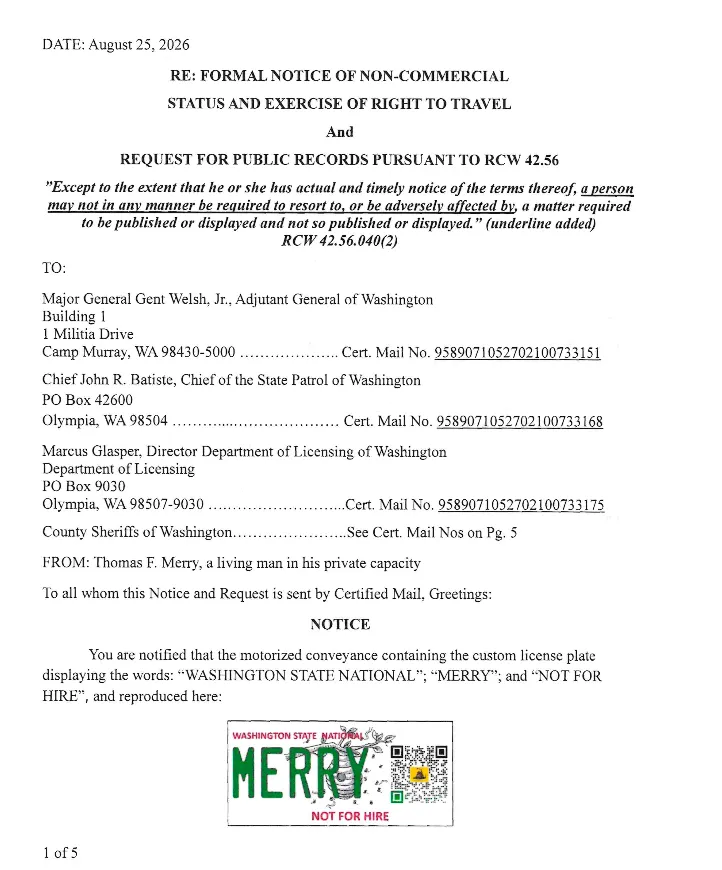
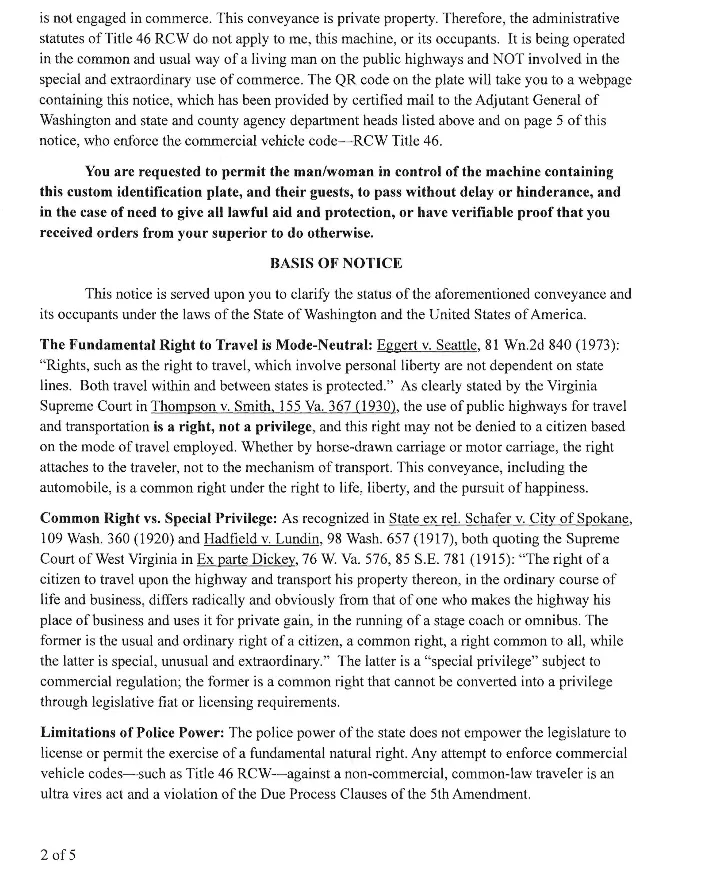
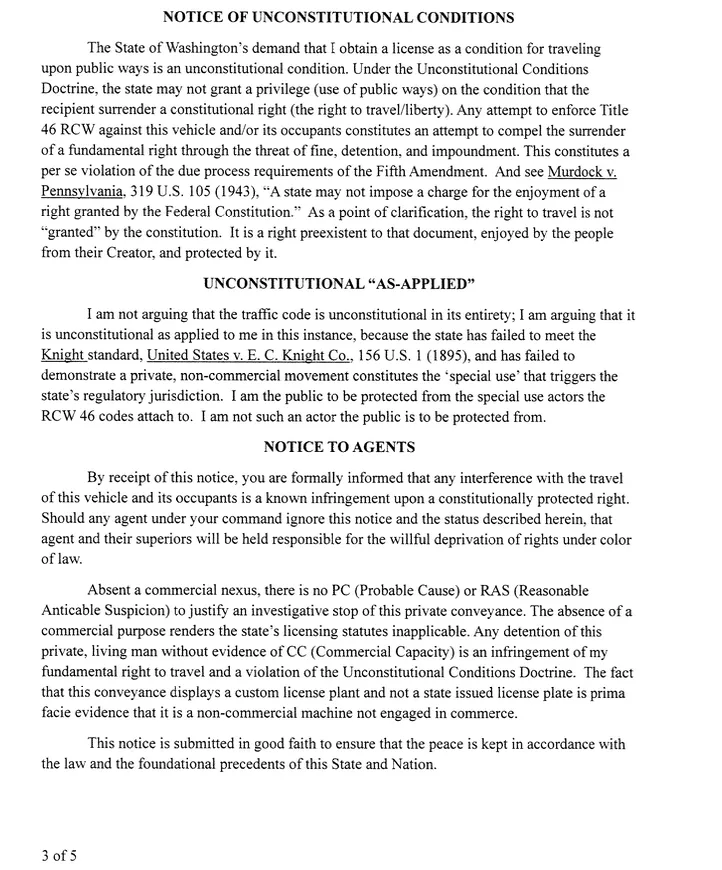
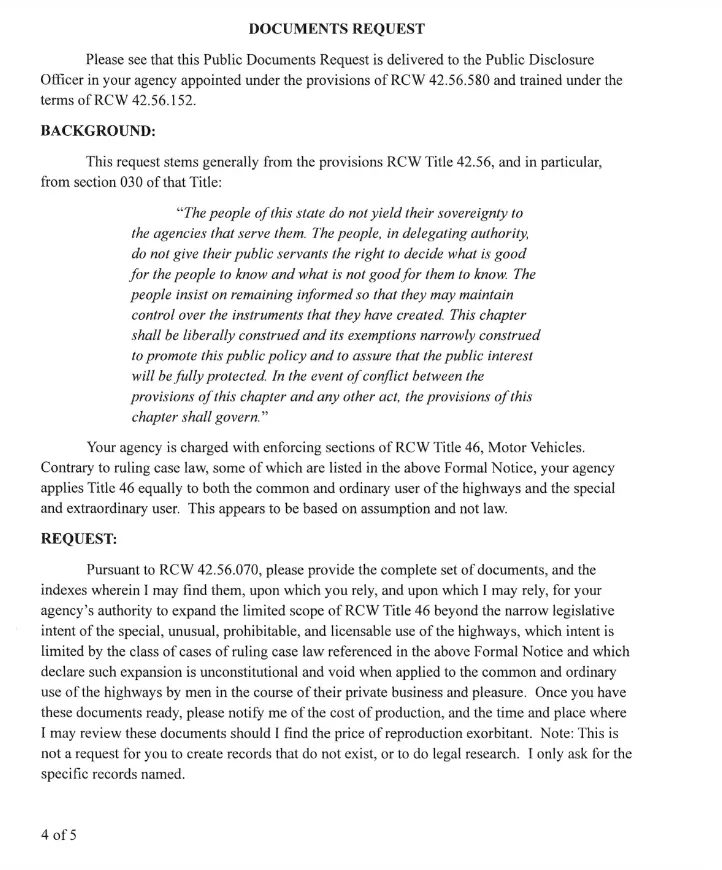
You are reading this Notice on a webpage you were directed to by the QR Code on my custom license plate, or on a business card I’ve given you directing you to this webpage.
By initiating a stop or detention of my person while I am engaged in the private exercise of my natural, pre-constitutional right to travel, you are acting outside of your lawful authority. Be advised that such an act constitutes an immediate, unauthorized seizure of my person and property under the Fourth, Ninth, and Tenth Amendments; Washington State Constitution Article I, Section 7; RCW 47.04.010(13), and a violation of my fundamental rights.
Article I, Section 7 of the Washington State Constitution mandates that “No person shall be disturbed in his private affairs, or his home invaded, without authority of law.” "Authority of law" is not satisfied by the mere citation of administrative statues.
The moment you interfere with my liberty without probable cause of a criminal act, the “damage clock” begins to accrue at the rate of $500.00 USD per minute of my detention. You are hereby on formal notice that any further action taken under color of law, despite this clear assertion of my non-commercial status, will be documented and used as evidence of willful constitutional tort. I hold you and all above you in the chain of command personally liable in your individual capacities for all damages, including loss of liberty, emotional distress, and financial harm, arising from this unlawful seizure of a free man. Your badge does not grant you immunity for the knowing and intentional violation of the unalienable rights of the people.
From this time forward, you are fully informed of the personal, financial, and professional liability you are incurring. Weigh your choices carefully.

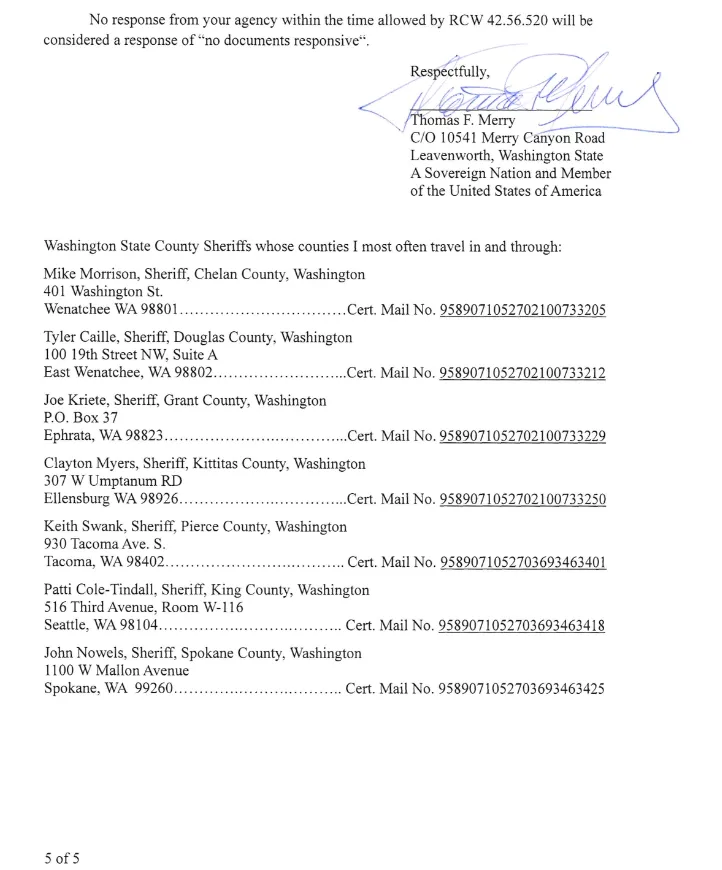
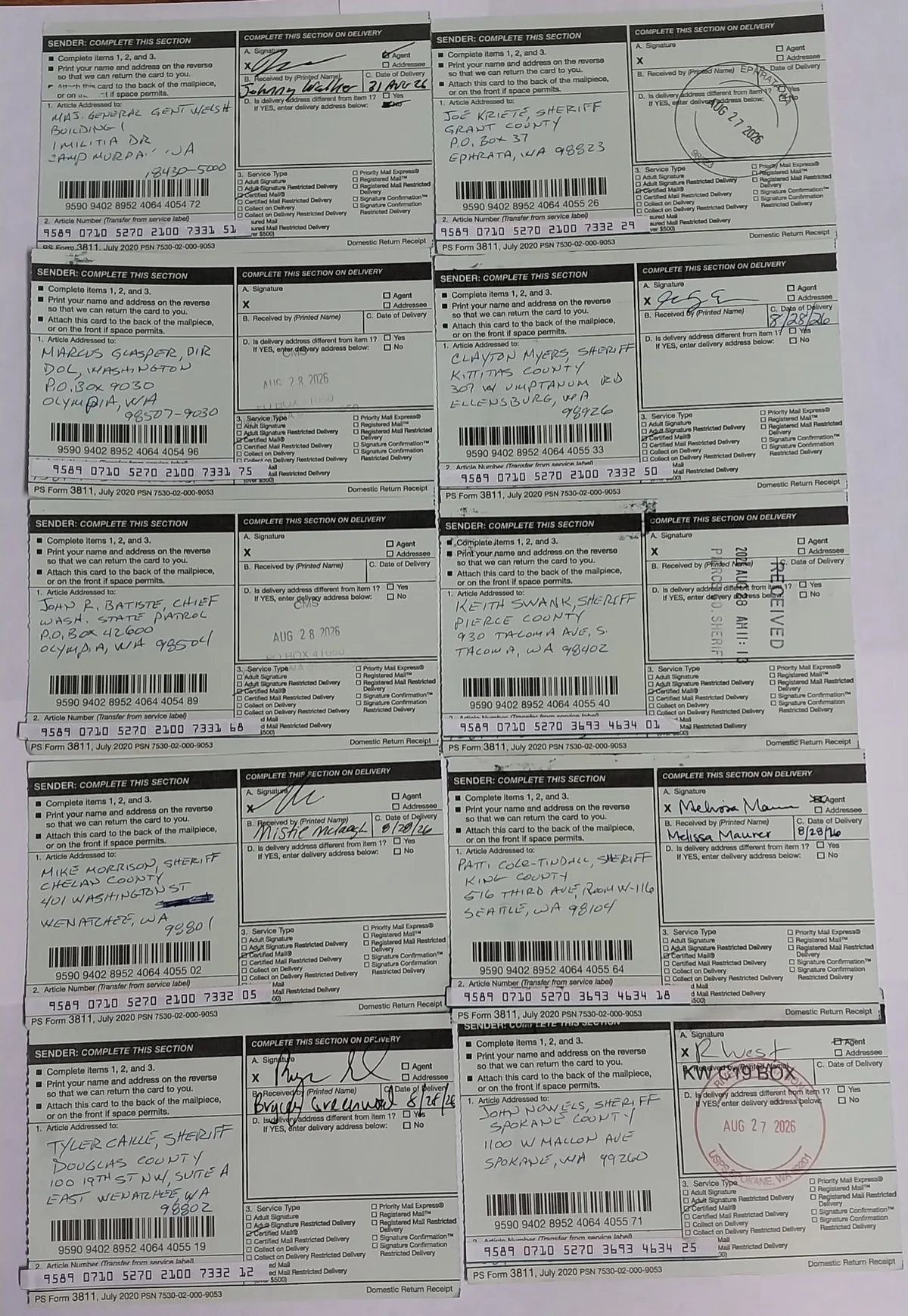
Responses
Washington State Patrol
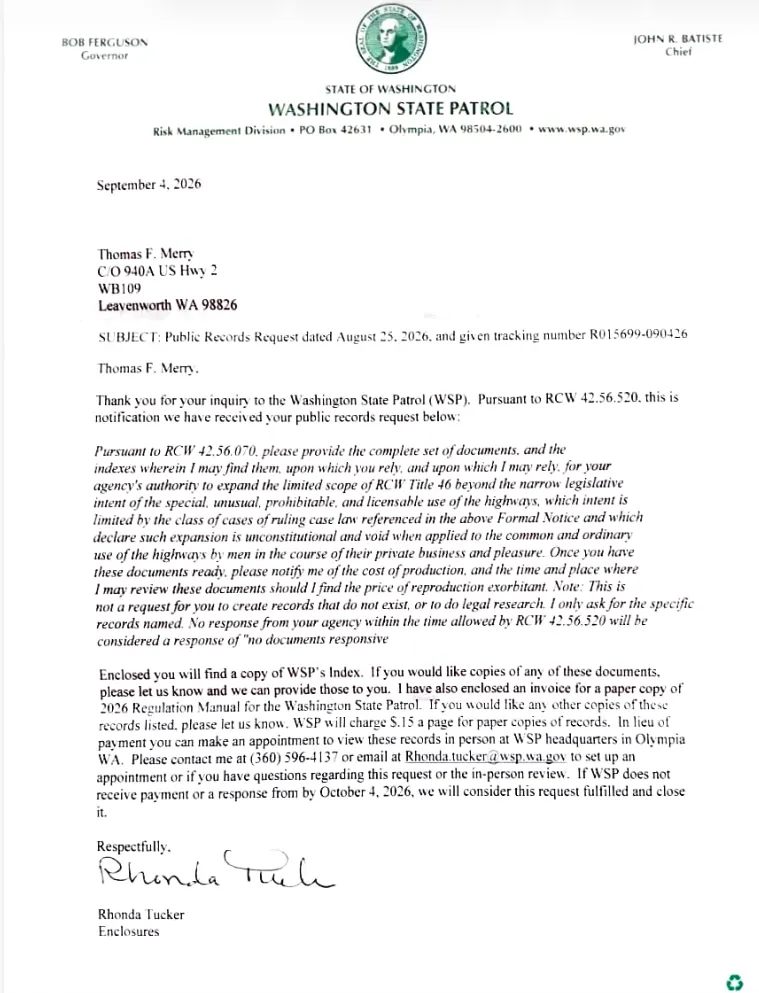
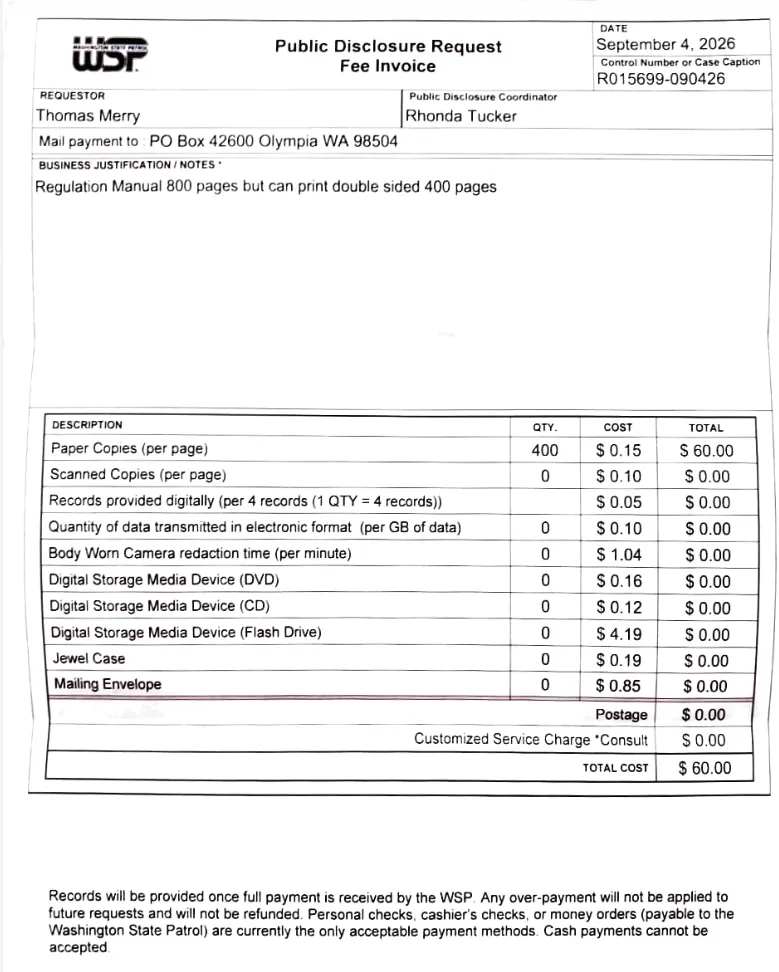
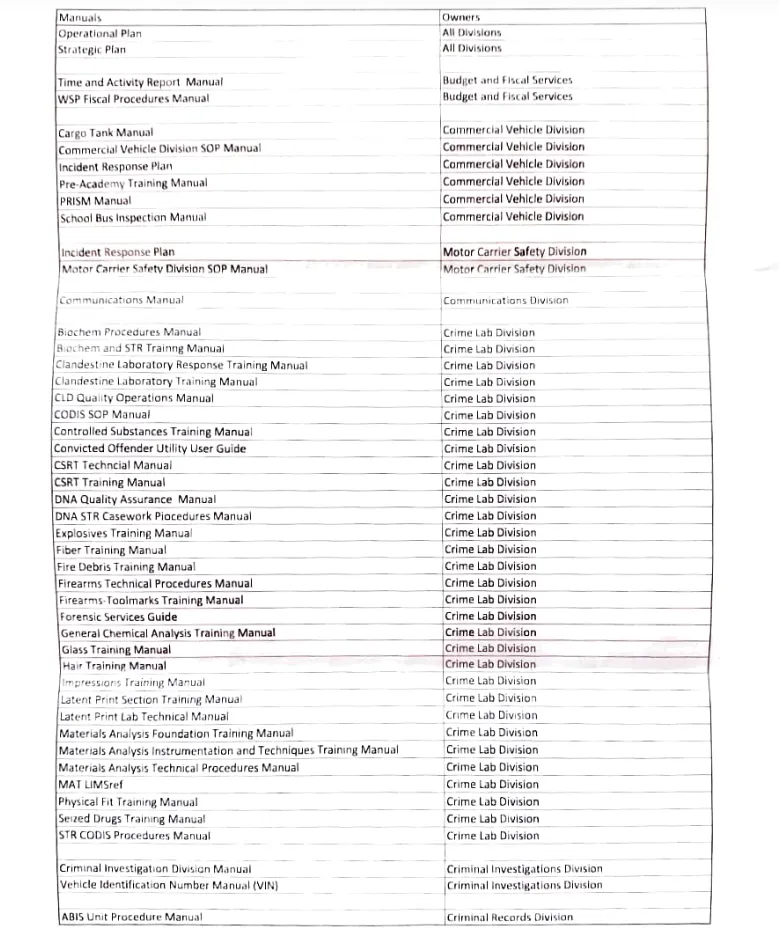
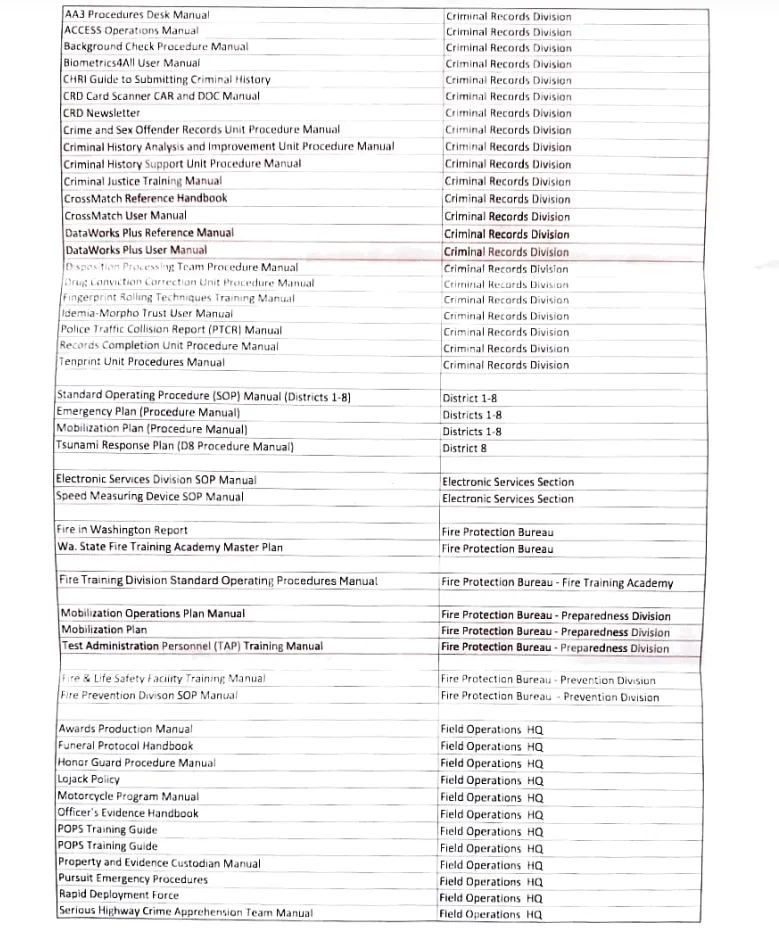
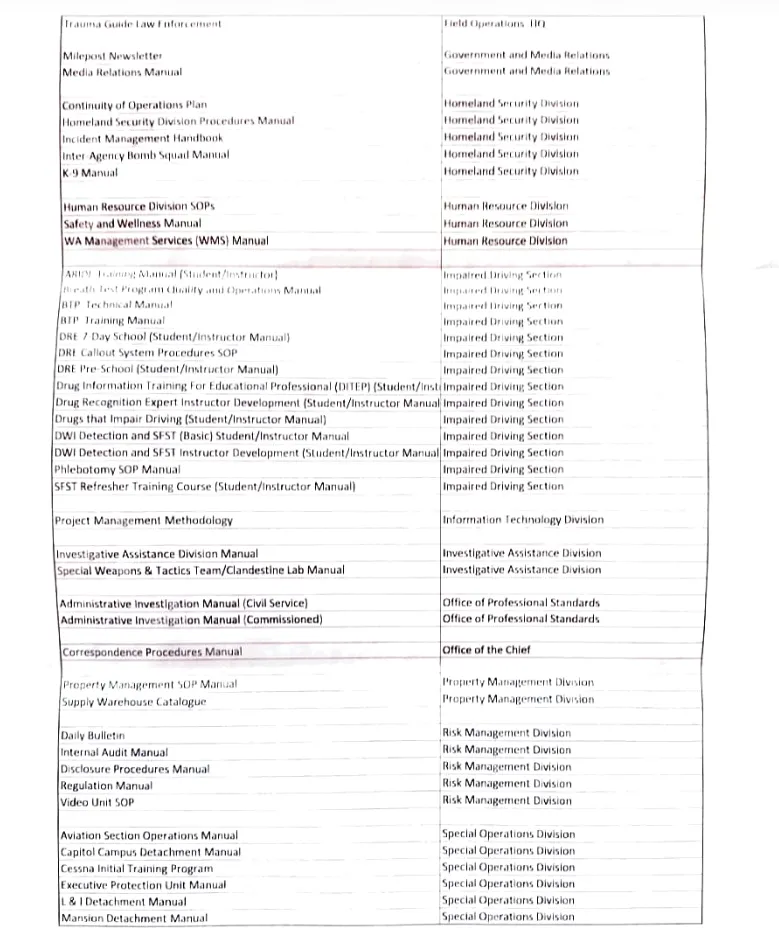
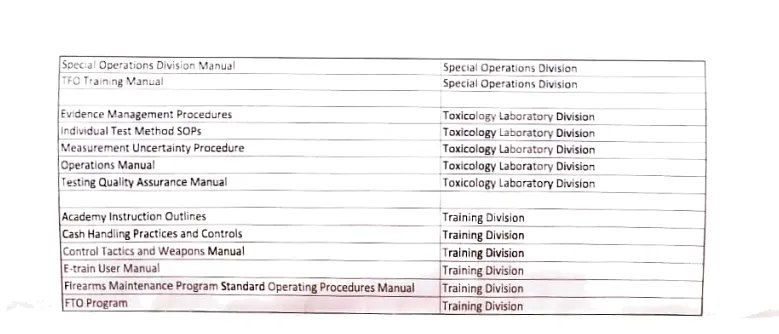
Review of WSP's Response
Review of WSP Response
The WSP response is a classic example of administrative obfuscation. By providing me with a list of 100+ internal manuals, they are not answering my request; they are attempting to bury the fact that they have no records defining their authority over a private, non-commercial traveler. They are betting that I will either get lost in the haystack of manuals or be intimidated by the cost and volume of the information.
The "Training Manual" Mirage
So how are the State Troopers trained to handle a man acting like one of the sovereign people? Looking at the index provided, there is no manual explicitly titled "How to handle Sovereign Citizens" or "Jurisdictional limits regarding private, non-commercial travelers." Instead, they hide their practices within broader, more insidious documents that are blatant expansions of the legislature’s intent in adopting RCW Title 46.
My response will be to send a “Notice of No Documents Responsive”
Your response provided a list of internal procedural manuals, none of which constitute the statutory or constitutional authority required to regulate private, non-commercial travel. I am not asking for your internal 'how-to' guides for your agents; I am asking for the legislative record of your agency’s authority to treat private, common-law travel as a commercial privilege. Since you have provided no such record, I am marking this request as 'no documents responsive' regarding the existence of your claimed authority.
Y
My purpose here is to create a record that they have no legal basis—only an administrative policy—to stop me. When I eventually present this to a court, I am not arguing about a "traffic ticket"; I am presenting a stack of evidence showing the agency admitted they have no records defining their authority to regulate my fundamental rights that per-exist government.
King County Sheriff
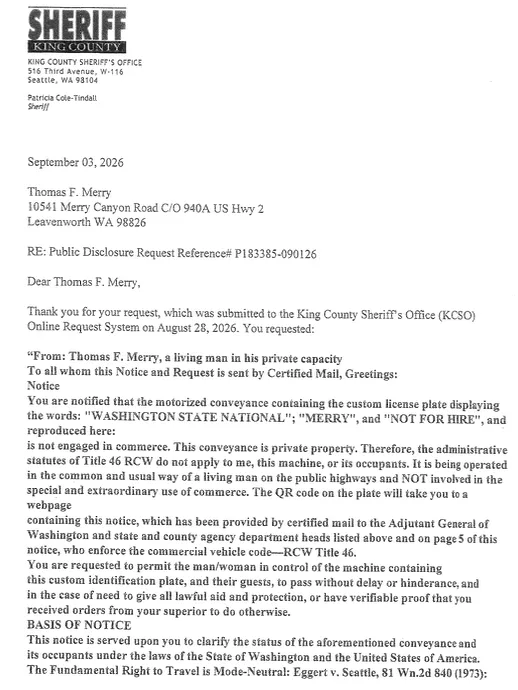
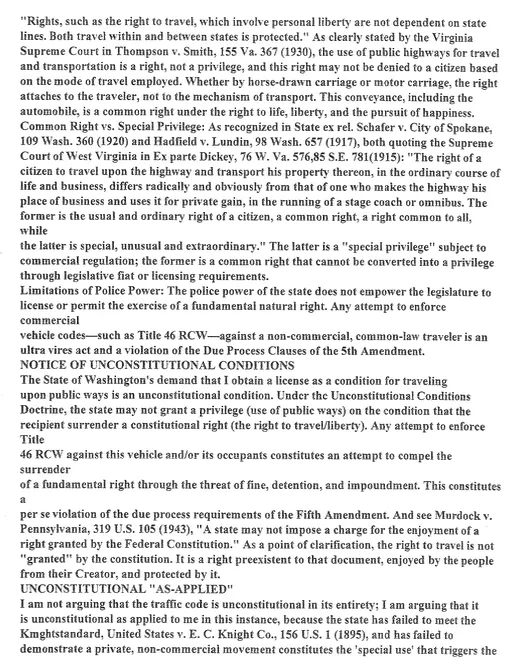
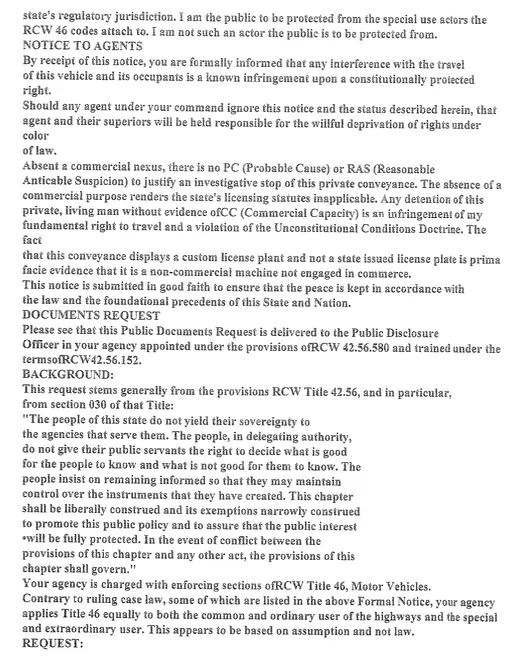
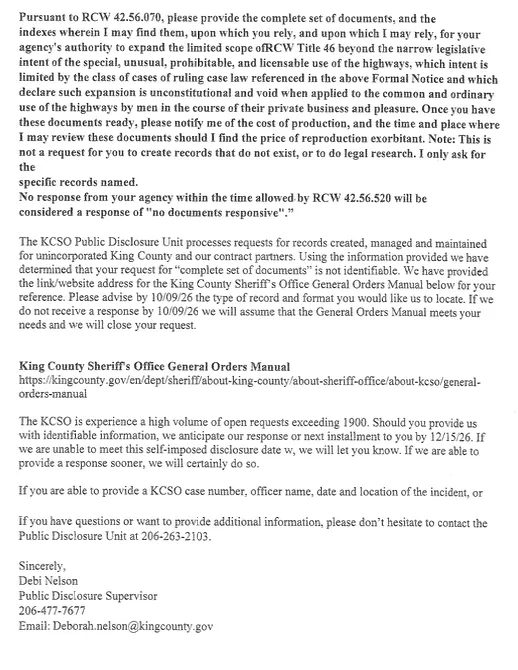
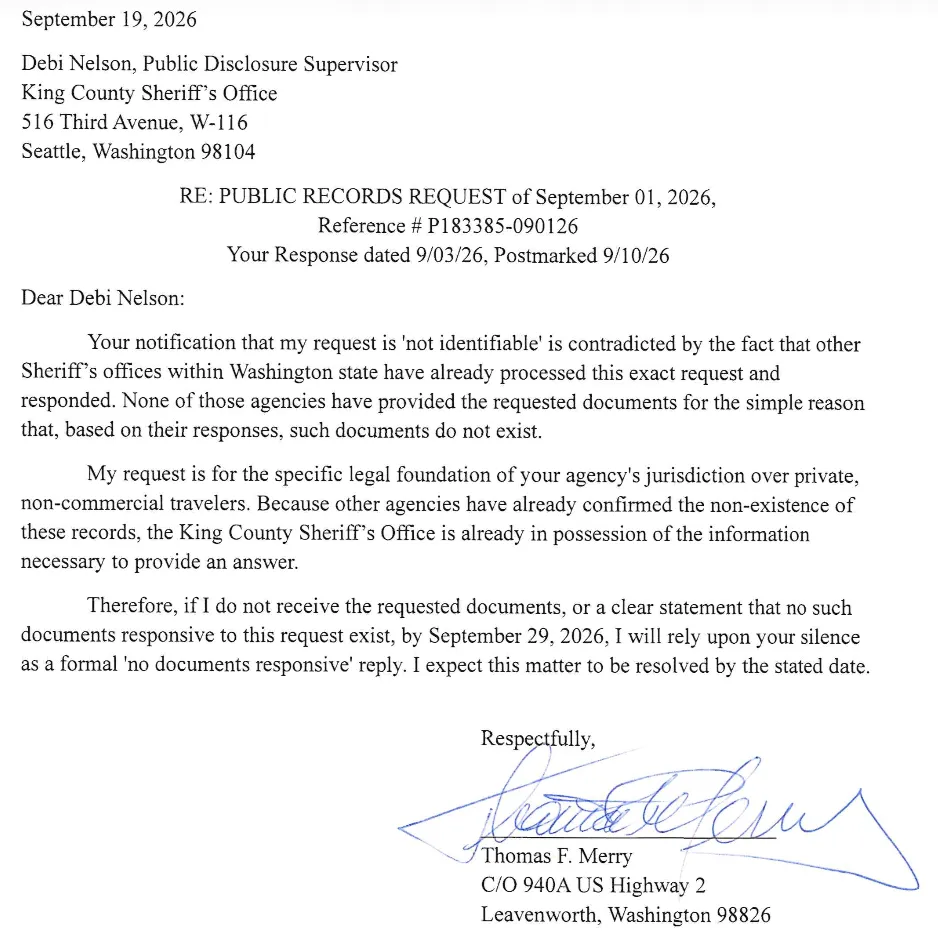
Reply to King County Sheriff's Response
Kittitas County Sheriff
Review of Kittitas County Sheriff's Response
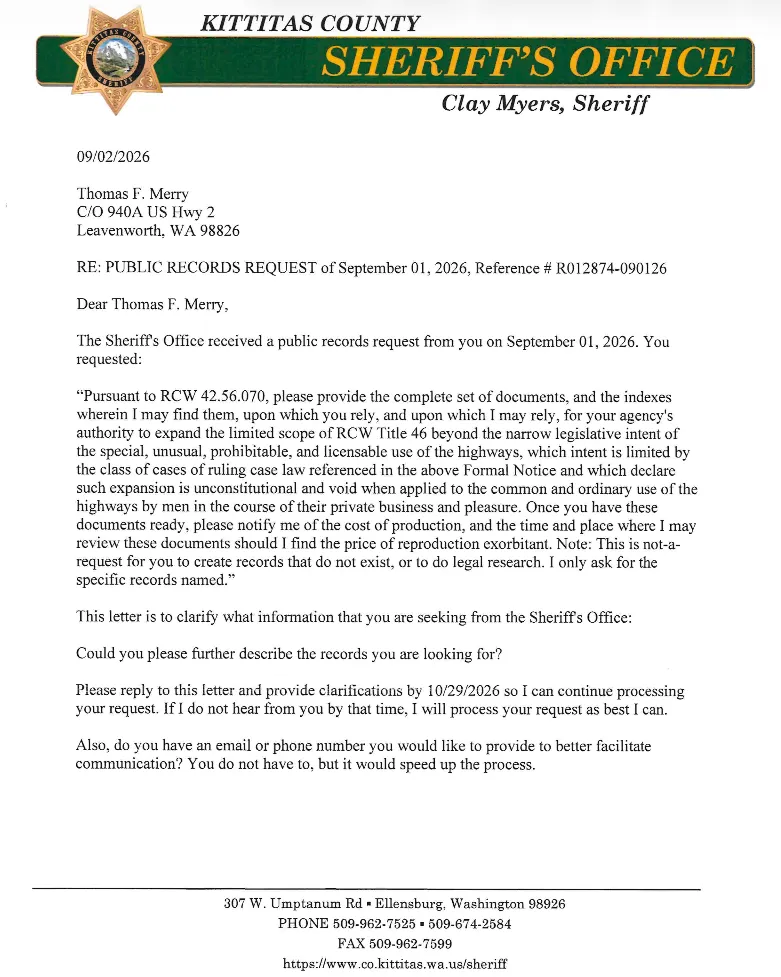
The Kittitas County Sheriff’s Office is using a common administrative stall tactic known as a "request for clarification." By claiming my request is ambiguous, they are attempting to reset the clock on their response time and force me to engage in a back-and-forth that dilutes the focus of my inquiry.
Do I need to clarify? No. My request is clear, precise, and narrow. I am not asking for thousands of pages of files; I am asking for the specific documentation that grants them the authority to enforce commercial codes (Title 46) against a non-commercial actor.
If they were truly confused, they would simply state that they have no such records. Asking for "clarification" is a signal that they have recognized the potential legal weight of my request and are trying to force me into a position where I accidentally broaden or soften my request, thereby making it "unreasonable" or "unduly burdensome."
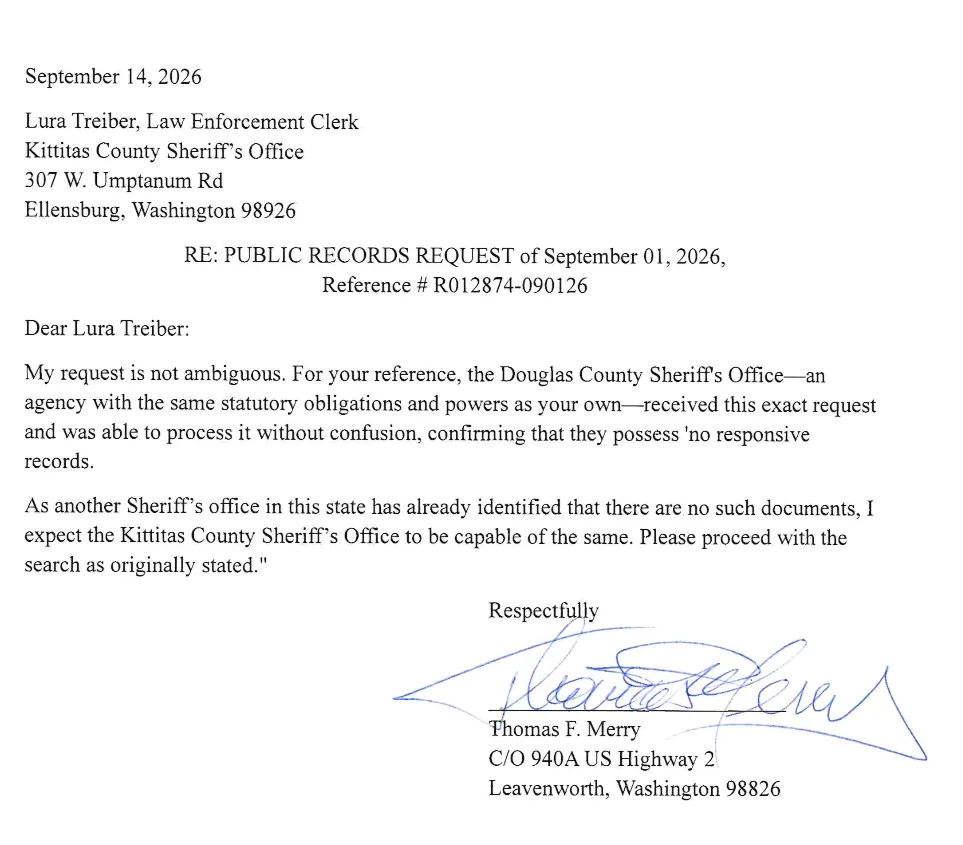
Reply to Kittitas County Sheriff's Response
Pierce County Sheriff
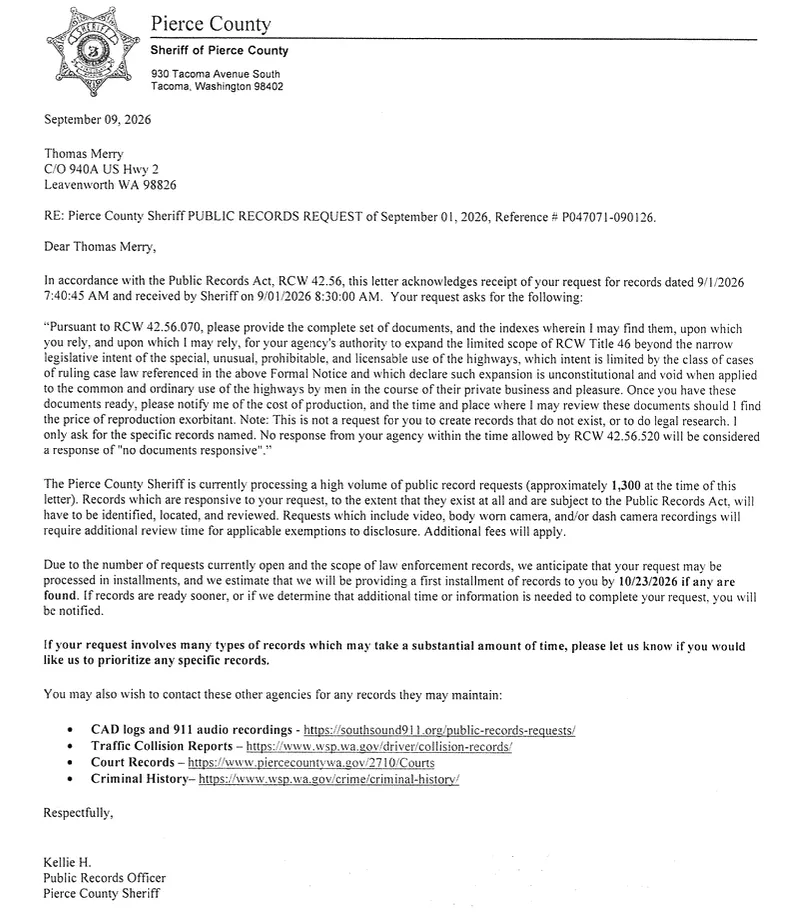
Review of Pierce County Sheriff's Response
The Pierce County Sheriff's response is a tactical delay, commonly referred to in public disclosure circles as a "rolling response" or "processing delay."
Is it within the terms of the disclosure statute? Technically, they are following the letter of RCW 42.56.520, which allows an agency to provide a "reasonable estimate of the time needed" to respond when a request is voluminous or requires significant review. By citing their "high volume of requests" and the need to "identify, locate, and review" records, they are attempting to satisfy the statutory requirement for a timely initial response.
However, it is a transparent attempt to kick the can down the road. They are not claiming the records don't exist yet, they are claiming they need until October 23, 2026, to determine if they exist and whether they are "subject to the Public Records Act."
What are they saying without saying it? Notice that they did not flatly deny my request as the DOL and the Military Department did. They are using the "high volume" excuse to stall. This is because a flat denial would force them to admit, just as the others did, that they have no records responsive to my claim of authority. By delaying, they hope I will grow frustrated, forget, or simply stop pressing them.
Reply to Pierce County Sheriff's Response
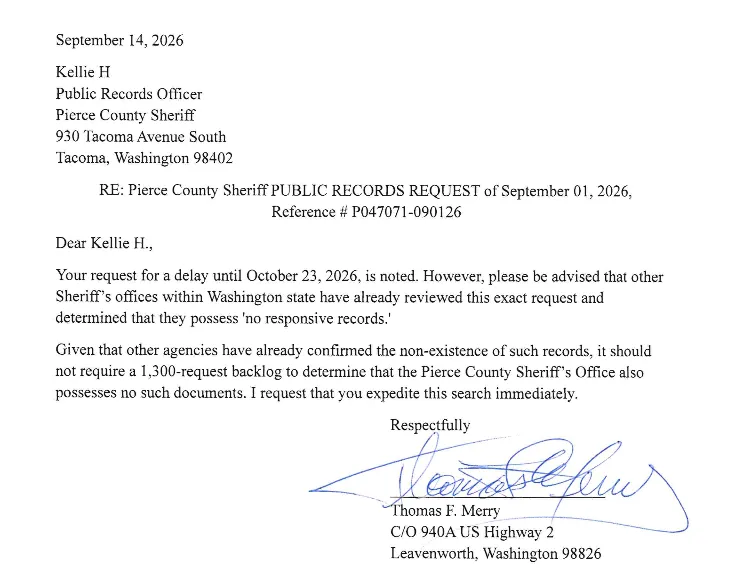
Department of Licensing
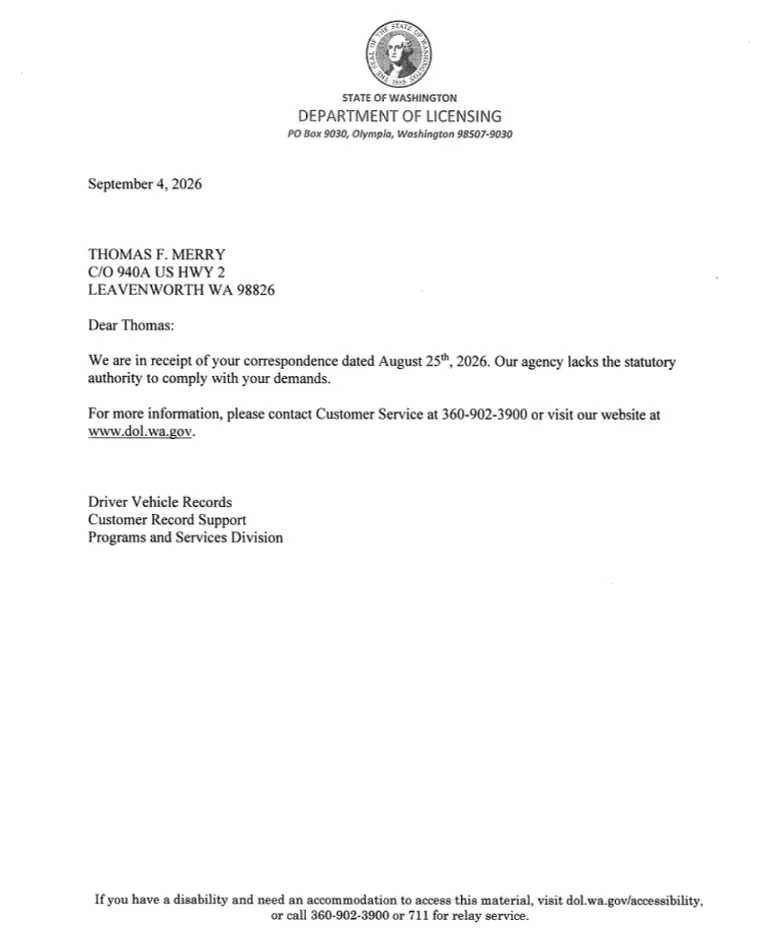
Review of DoL's Response
RCW 46.01.011
“The legislature finds that the department of licensing administers laws relating to the licensing and regulation of professions, businesses, and other activities in addition to administering laws relating to the licensing and regulation of vehicles and vehicle operators, dealers, and manufacturers. The laws administered by the department have the common denominator of licensing and regulation and are directed toward protecting and enhancing the well-being of the residents of the state.” Thus, the reason for the existence of the DOL is to license and regulate professions and businesses and vehicles that have the common denominator of illegality. A license being the permission to do that which is otherwise illegal. A pre-existing right may not be made illegal and a tax or license fee charged for its exercise by a living man.
The Department of Licensing’s response, that they "lack the statutory authority to comply", is a tacit, bureaucratic admission that they cannot produce the documents requested because those documents do not exist.
They are trapped by the request. If they were to provide documentation, they would be forced to reveal that no legislative act explicitly subjects the common right of travel to their commercial licensing jurisdiction. By claiming they "lack the authority" to comply, they are attempting to insulate themselves from having to admit that their regulatory regime is based on administrative assumption rather than statutory mandate.
Why They "Lack Authority"
The state’s administrative agencies are creatures of statute. They only possess the authority expressly granted to them by the legislature.
The Absence of Evidence is the Evidence: When an agency is asked to produce records defining their authority to regulate "private, non-commercial travel," and they respond that they "lack the authority to comply," they are essentially conceding that they have no records defining such authority.
The "Administrative Loop": They are banking on the hope that this will be viewed as a simple administrative failure rather than a substantive jurisdictional void. They want the requestor to contact "Customer Service" (as they directed) to be funneled back into the standard administrative feedback loop, where they can continue to treat his status as a "customer" rather than a sovereign.
The Constitutional Vacuum: By failing to provide the records, they have effectively failed to rebut this notice. This notice of non-commercial status remains unrebutted on the public record.
What This Means Moving Forward
We have successfully documented that the state has no records supporting the expansion of their jurisdiction into your private affairs. This is a vital piece of evidence. In a legal challenge, this communication serves as proof of:
Administrative Overreach: We’ve provided the state an opportunity to cite their own authority; they failed to do so.
Lack of Due Process: We have attempted to resolve the jurisdictional question through proper administrative channels, and the state has refused to engage.
Notice of Non-Commerciality: Our formal notice remains unanswered, which we can now use to assert that the state is acting in "bad faith" if they continue to attempt to enforce Title 46 against us.
Douglas County Sheriff
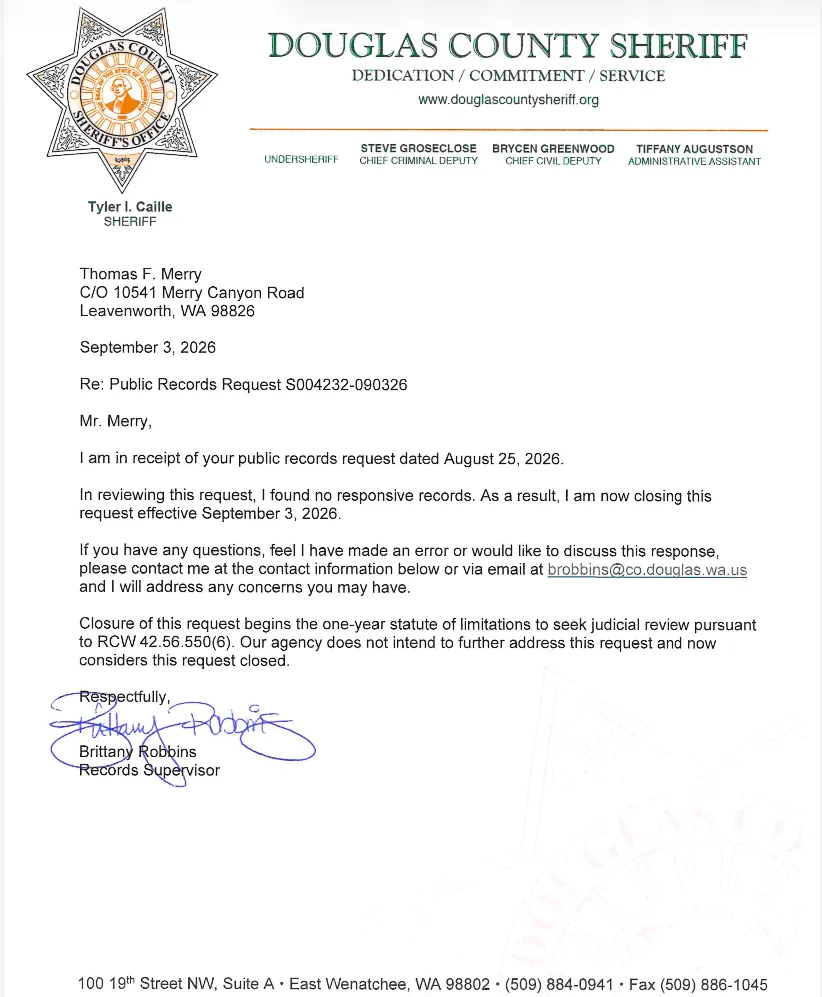
Review of Douglas County Sheriff's Response
The Douglas County Sheriff is the only respondent that answered transparently and truthfully. My respect to him and his staff.
The other sheriffs who did not respond are saying the same thing as provided in my request…no response is a no documents responsive answer. Though it would have been more transparent to simply write me and say that.
Adjutant General
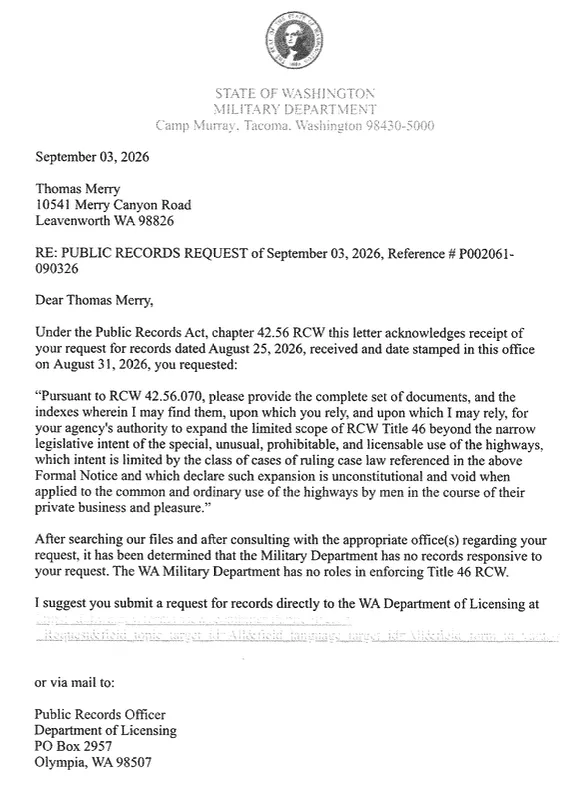
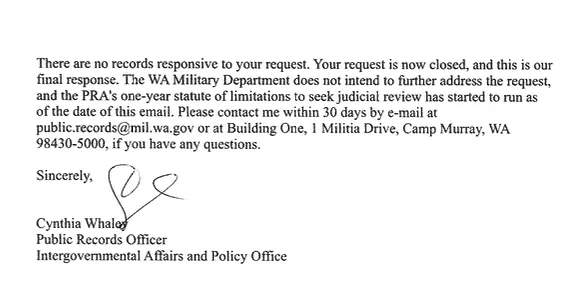
Review of Adjutant General's Response
The Adjutant General’s response confirms what I expected: the state is separating/ dividing/denying its own authority to avoid accountability.
By stating that the Military Department has "no roles in enforcing Title 46 RCW," they are attempting to distance the command structure from the tactical enforcement being carried out by state and local law enforcement. This is a standard maneuver of the managerial state: when challenged on the legitimacy of their reach, they claim a lack of bureaucratic connection to the specific enforcement arm.
The Strategic Value of This Denial
This letter is now a critical piece of evidence in my administrative file for two reasons:
Exhaustion of Administrative Remedies: I have now gone to the highest levels of the state—the Adjutant General—and demanded evidence of the authority to regulate my private, non-commercial travel. They have explicitly stated, under the Public Records Act, that they have no records responsive to my request.
The "Chain of Command" Disconnect: Should I eventually be detained or pulled over, the officer will claim he is acting under the "authority" of the state. I can now demonstrate that I sought that very authority from the state’s high command, and they disavowed it. This demonstrates that there is no cohesive, legally validated mandate for their actions; it is purely arbitrary enforcement. Though this is not a conversation for the highway guardrail.
The Adjutant General's Refusal to "Notify"
As director of the state’s emergency management and 911 systems, RCW 38.52, I sent this to the Adjutant General to put the 911/emergency system on notice regarding my status. His refusal to acknowledge this or integrate it into their systems, by pointing me back to the DOL, is a refusal to govern in good faith.
The Reality: The Military Department, the State Patrol, County Sheriffs, City Police, and the DOL all operate as a unified front under the Governor’s executive authority. By telling me that they have "no roles," the Adjutant General is effectively saying, "We don't want to document your status because that would require us to recognize your right to travel as something separate from our commercial jurisdiction." They are now operating in a state of willful ignorance. I have provided them with the information, and they have processed it, closed the file, and consciously chosen not to act. Thus, effectively separating themselves from any qualified immunity they would otherwise enjoy.
RiverCom 911 Request
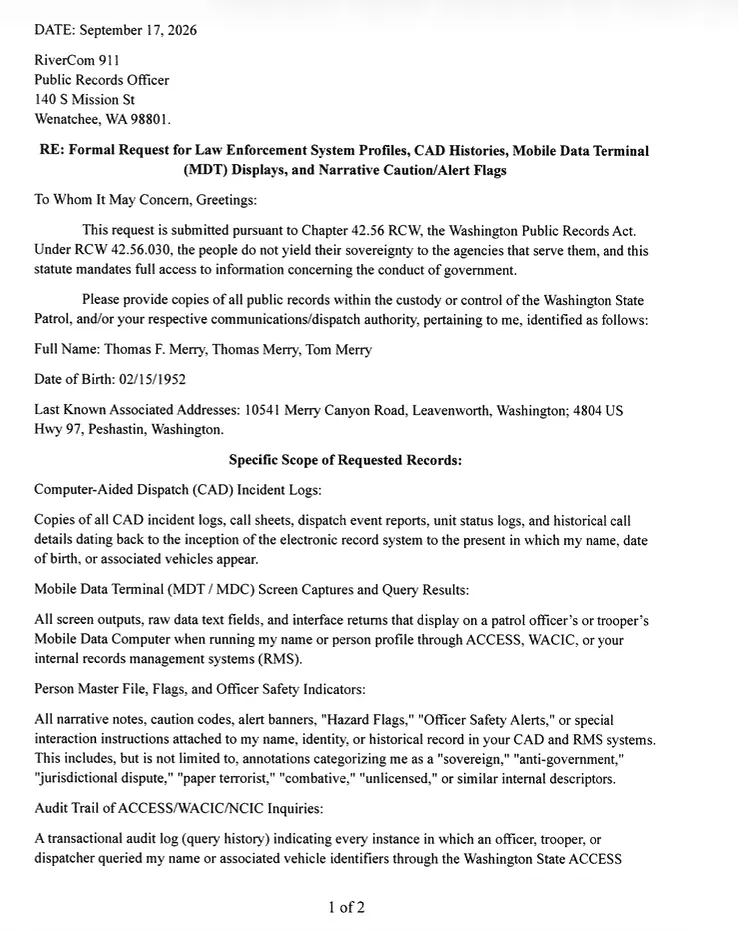
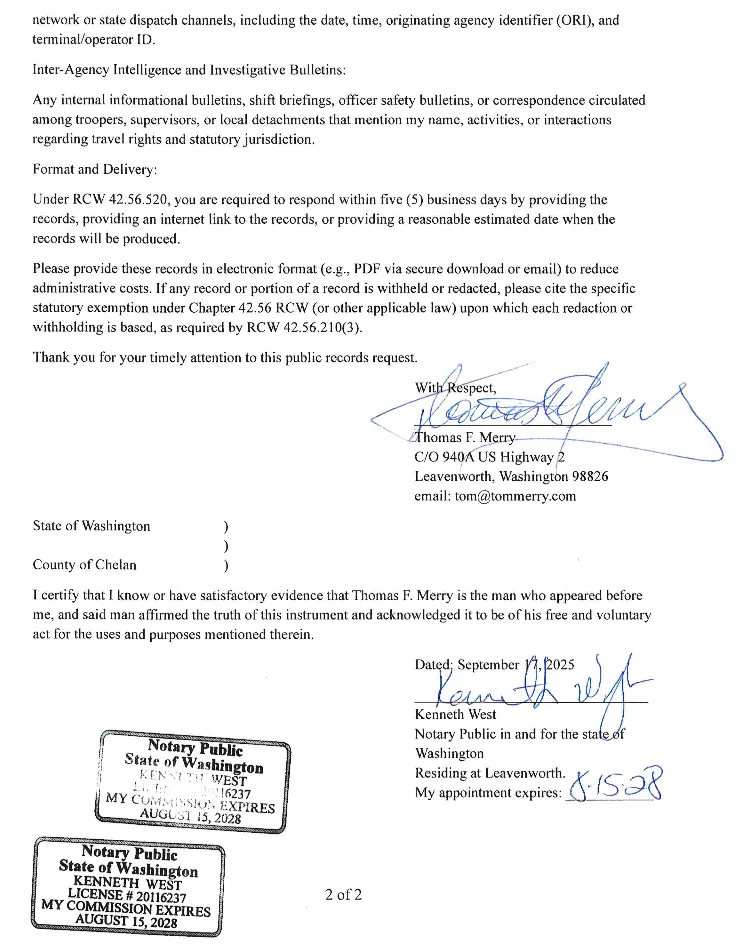

Thomas F. Merry | Lynda L. Merry
10541 Merry Canyon Road, Leavenworth, Washington State